Why I draw before I present
A rough rich picture often finds what the slides missed, because people correct a drawing but only nod at a deck.

My first drawings are rough, and that’s on purpose. Let me say that first, because it matters to everything else.
The opening sketch of an idea is boxes, arrows and stick people. Sometimes it’s just words in a rough shape on the page, standing in for a picture I can’t draw yet. “Regulator” with a circle round it. “Where does the money actually come from?” with an arrow pointing at nothing.
And I draw it before I present anything. Often it starts from meeting notes. Sometimes it starts in a one-to-one, with the paper turned so the other person can see it and a pen offered across the table.
That’s deliberate. The weakness is the point.
A rough picture invites correction. A finished deck says “this is settled”. A messy sketch says “this is my best guess, and I know it’s wrong somewhere”. People can’t resist fixing it. “No, that box goes there.” “You’ve missed the maintenance team.” “That arrow should go both ways.”
Compare that with a slide deck. People nod at a deck. They might ask a question at the end if they feel brave. But a drawing gets argued with, added to and changed on the spot, and every one of those changes is feedback you’d otherwise never hear.
It finds what the slides missed. I’ve lost count of the times a rough picture has exposed something the analysis didn’t contain. A relationship nobody had mentioned. A team that quietly owns the problem. A dependency that sits outside the diagram altogether. The slides covered what I knew. The sketch uncovered what I didn’t.
It carries a lens. Often the words on the page matter more than the shapes. “Risk”, “trust”, “who decides”. They’re the lens through which the picture should be read, or the idea that feels important but hasn’t yet found a place. Writing it down, even badly, gives the room something to react to. Leaving it out means it stays unspoken.
It lowers the stakes for everyone. If my drawing is clearly not precious, theirs doesn’t have to be either. Someone takes the pen and adds a stick person. Then someone else does. By the end, no one’s presenting to anyone. We’re all working on the same page.
At some point the sketch does get tidied. The finished picture has proper shapes, a consistent style and a tone chosen for the audience, and it earns its place in the board paper. But I’d never start there. By the time it’s polished, it already contains the room’s corrections, and that’s why it’s better than anything I’d have drawn alone.
A real example: from flowchart, to doodle, to published picture
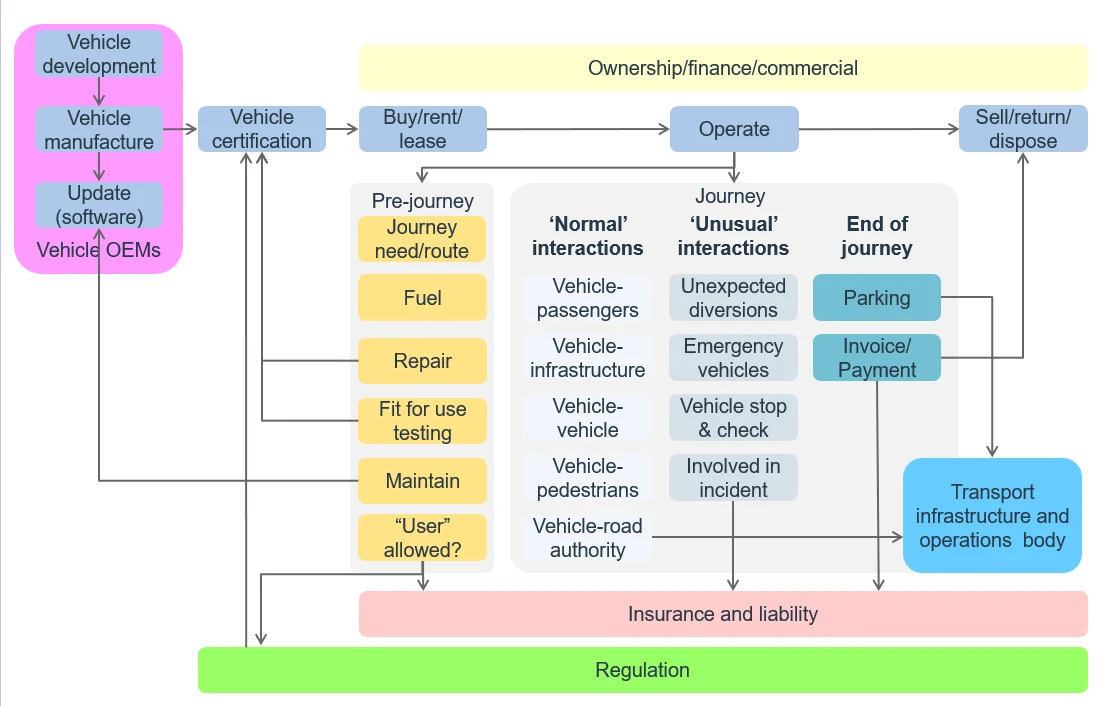
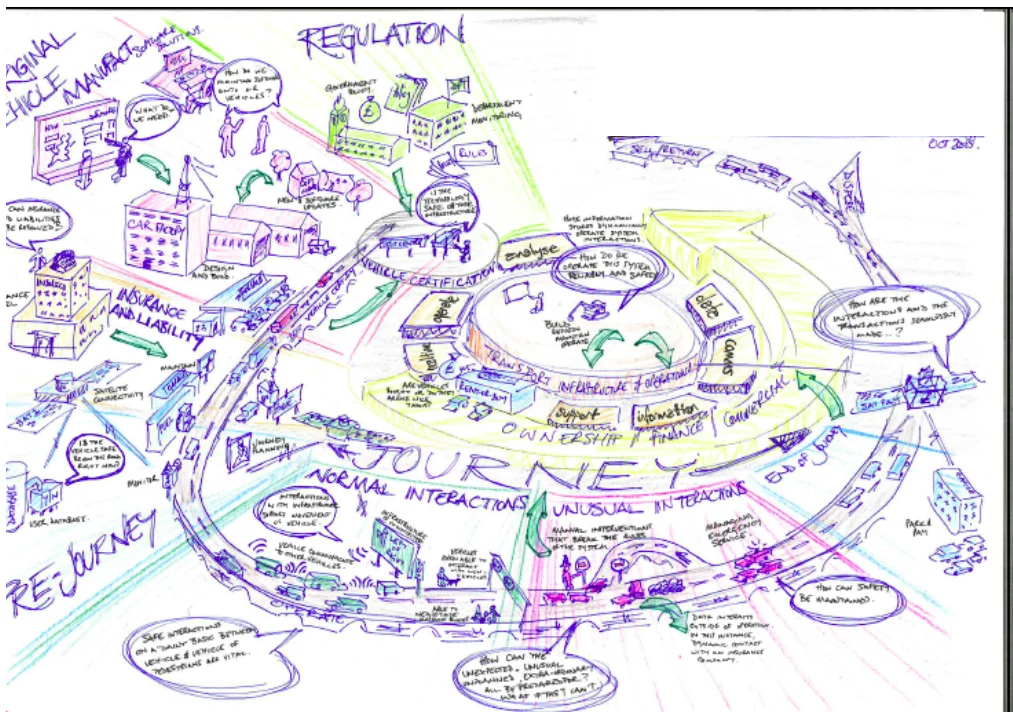
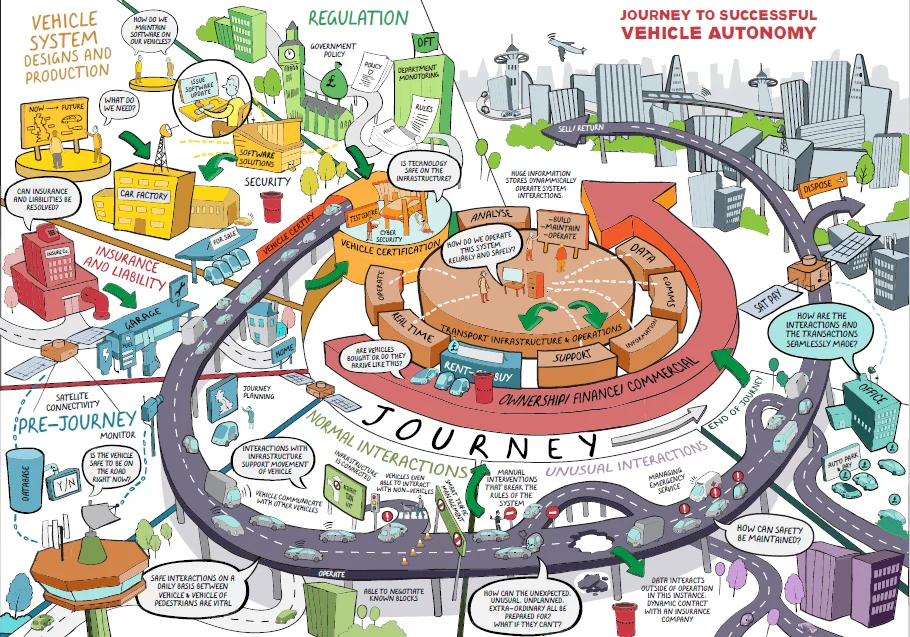
This is what a rich picture does. It’s a way of seeing a whole situation at once: the people, the pressures, the flows and the gaps. It starts rough and gets better because other people helped.
Over to you When did you last put a half-finished idea in front of someone, and what did they add that you’d never have thought of?
Let’s talk
Have a half-finished idea?
A rich picture starts rough and gets better because other people help. That is what a Rich Picture Sprint is for.